Pattern Sphere set out to make complex, systems-level thinking accessible to more people. I partnered with the founders to transform early ideas into a user-focused product strategy. By grounding design in real user needs, we moved from concept toward a practical, impactful tool.
Pattern Sphere
My role
Lead UX Designer Researcher
Responsibilities
Product Strategy
Research
Personas
User Journey Maps
User Flow
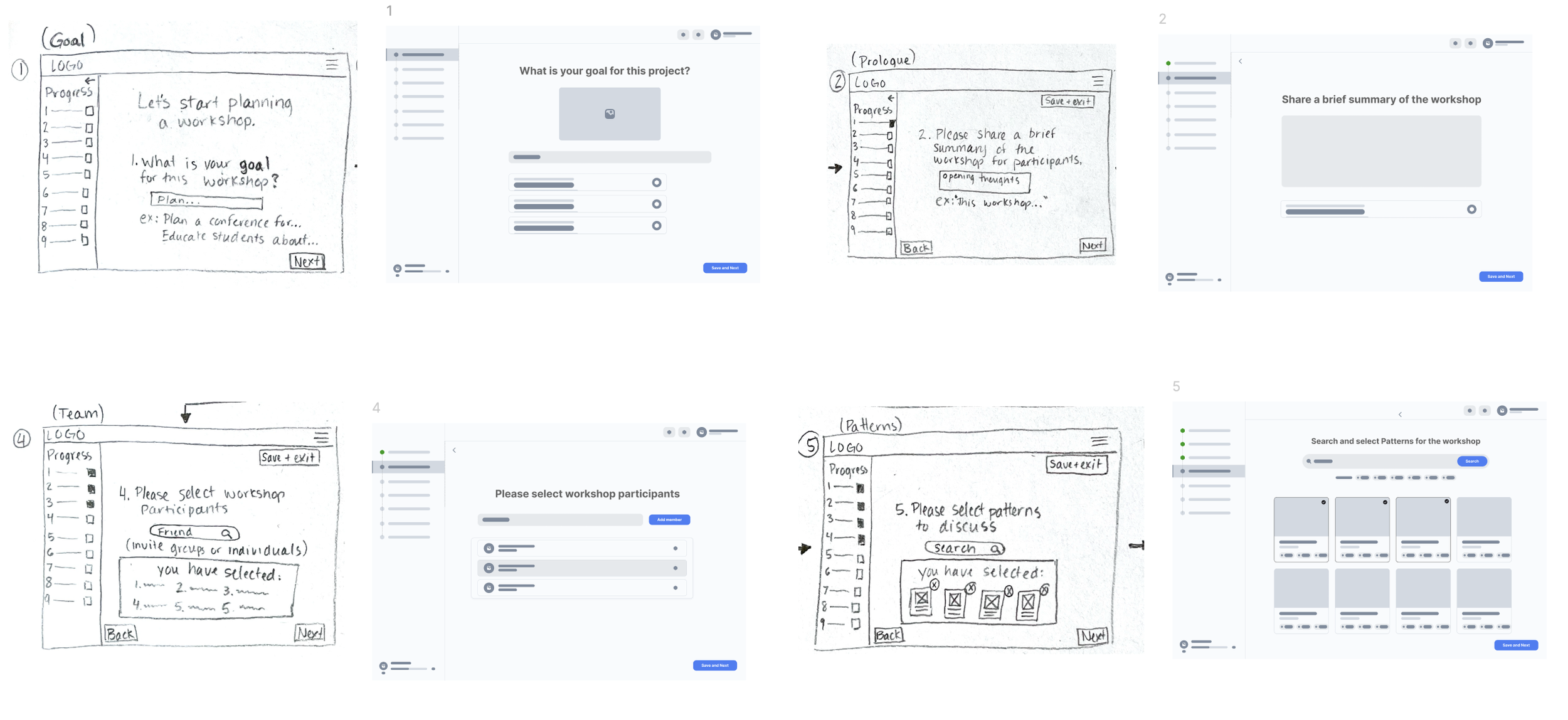
Wireframes

Project Duration
2024 – present
Project overview
The problem
Pattern languages have immense potential to drive systemic change, but they are often perceived as abstract, inaccessible, or difficult to apply in real-world contexts.
The goal
Develop a user-centered platform that transforms complex pattern language theory into practical, actionable tools.

User Research
Parameters
Study type: Interviews and surveys
Location: Remote
Participants: 43 potential users participated in the survey and 2 participated in the interview
Length: 20 minute surveys,
45 minute interviews
Questions
Who uses pattern languages
Why they want to use them
What they are trying to accomplish
How they currently work and learn
Goals
Identify key user demographics
Understand user motivations
Discover users' primary goals, challenges, and frustrations when addressing systemic issues.
Identify distinct user groups
Gather insights to inform design decision
Key Insights
Ease
Users want to easily find, adapt and apply patterns.
Examples
They need case studies and examples to bridge theory and practice.
Understanding
Half seek pattern literacy support to better understand and use patterns.
Connection
They value collaboration and integration, not more silos.
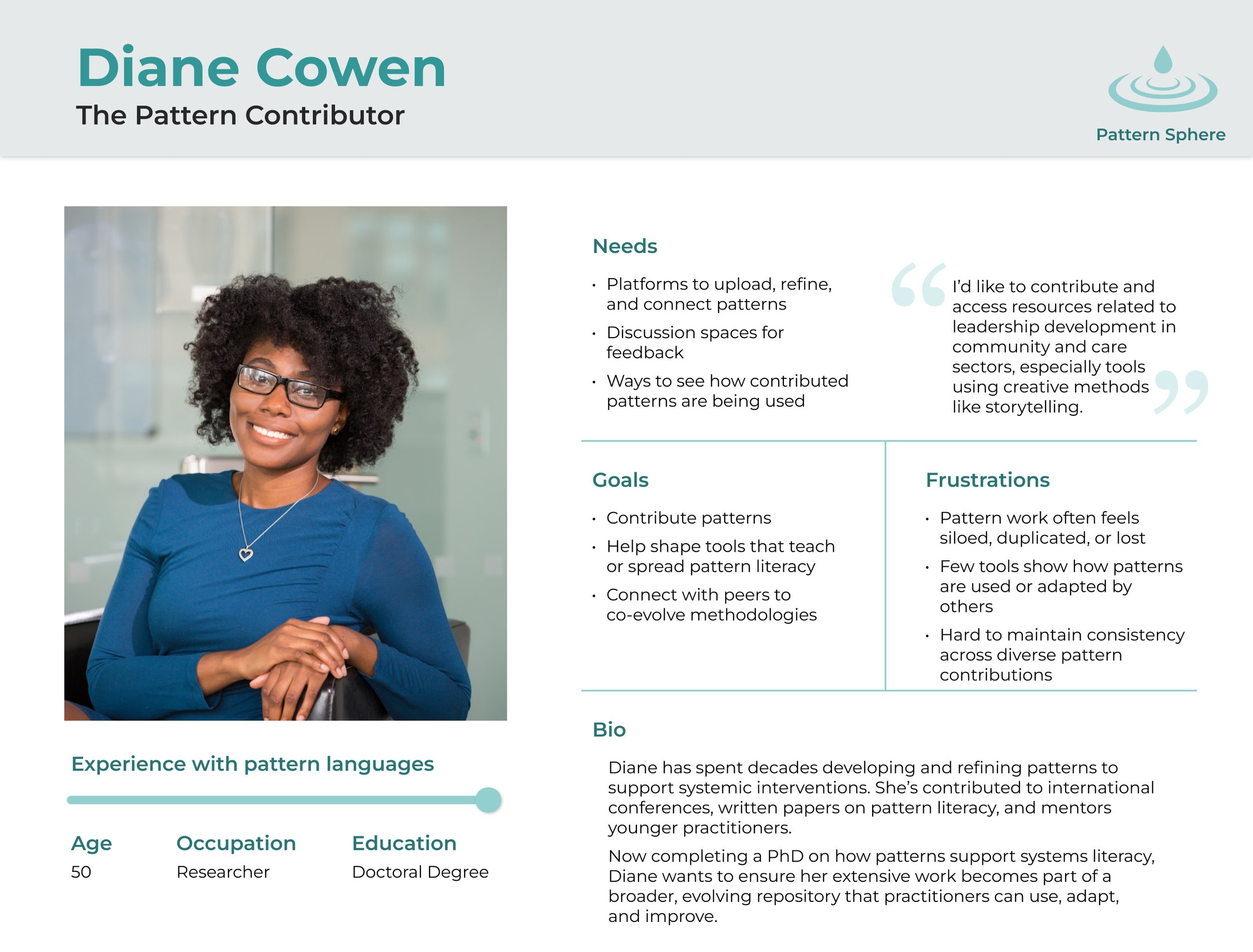
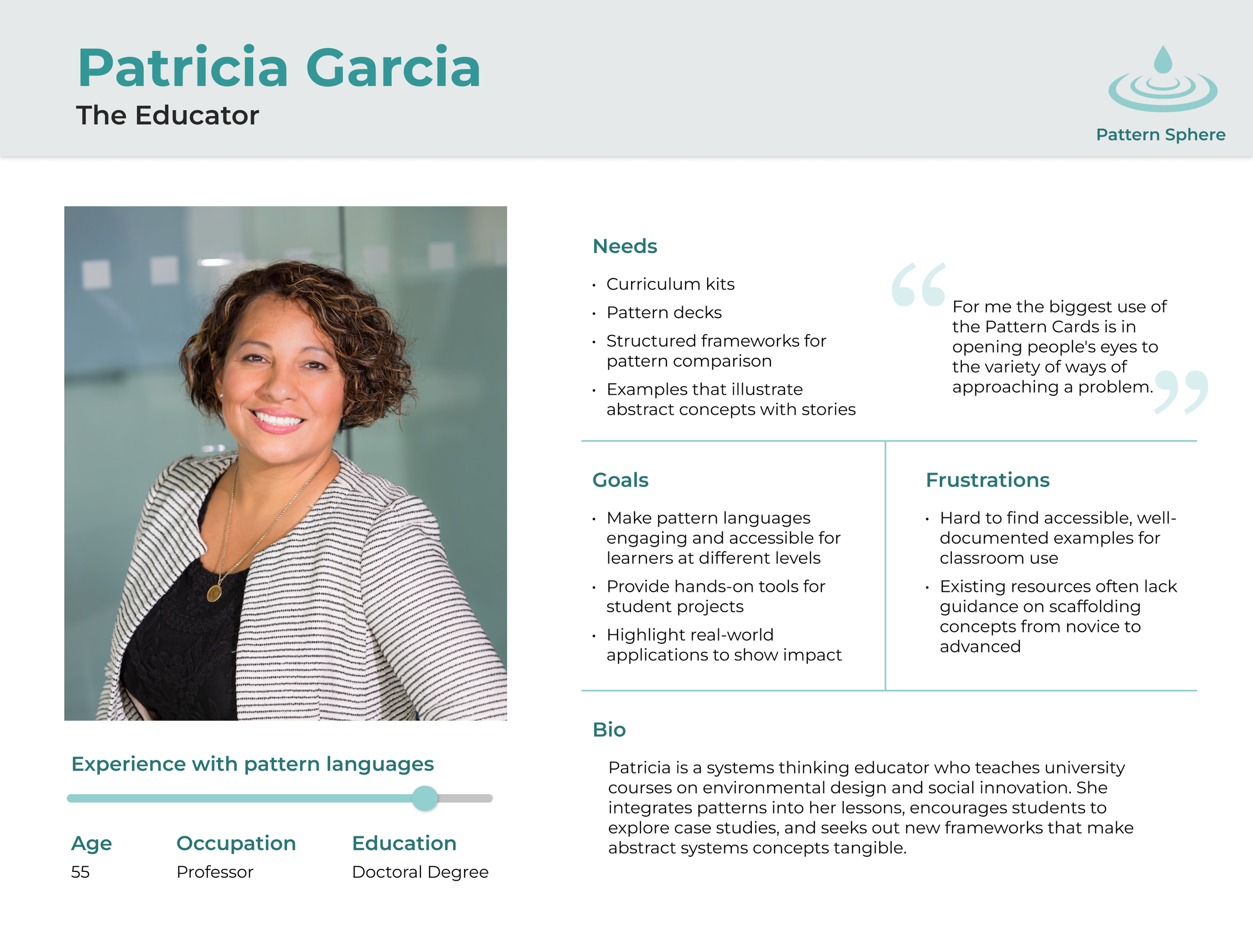
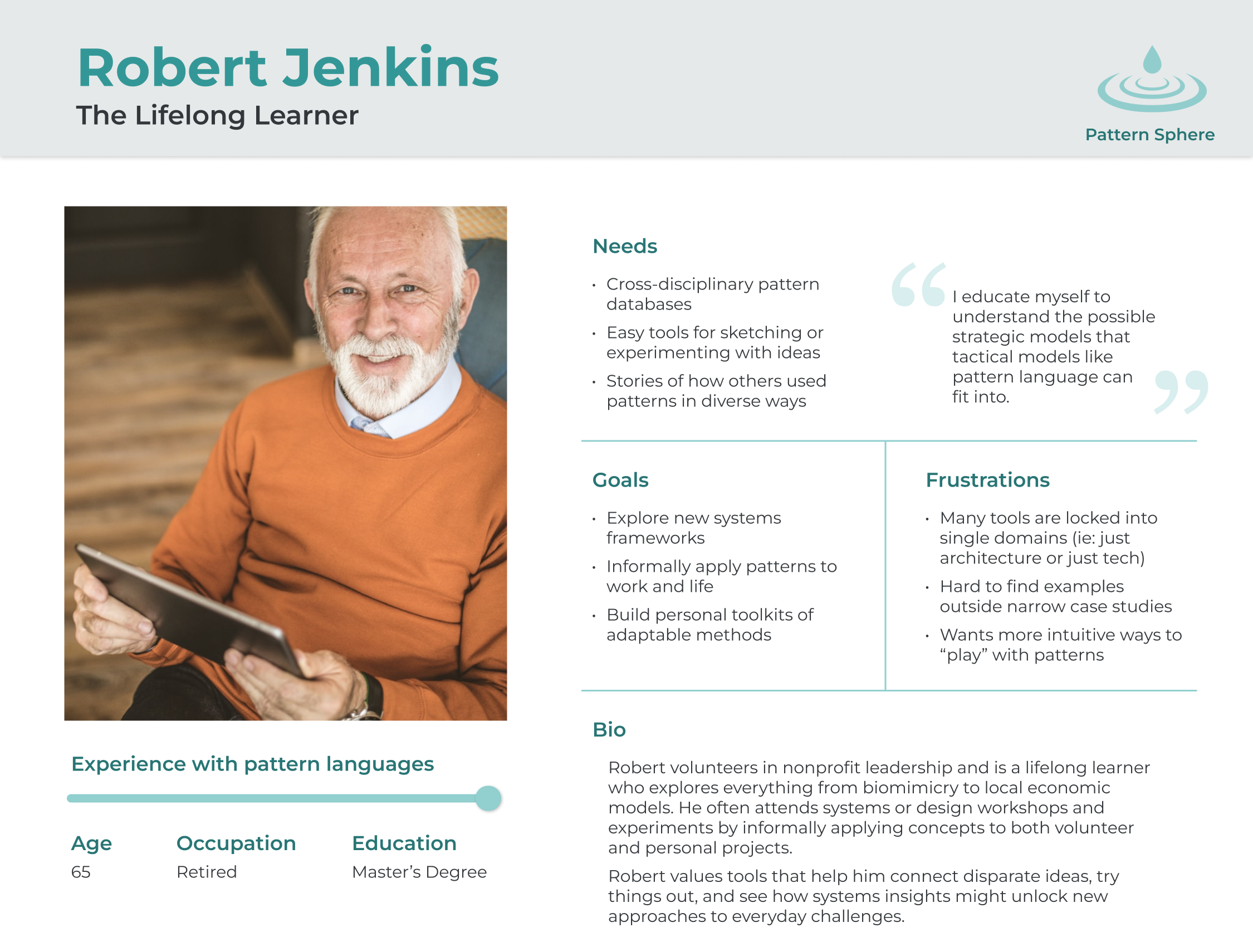
Personas that Drive Design
With user insights in hand, I partnered with the founders to craft personas that reflected the diverse ways people engage with pattern languages.
These personas became decision-making tools that helped us:
Clarify product priorities
Evaluate feature ideas
Keep design decisions grounded in real user goals
Each persona brought user needs and definitions of success into focus, shaping the direction of our features.
Designing the
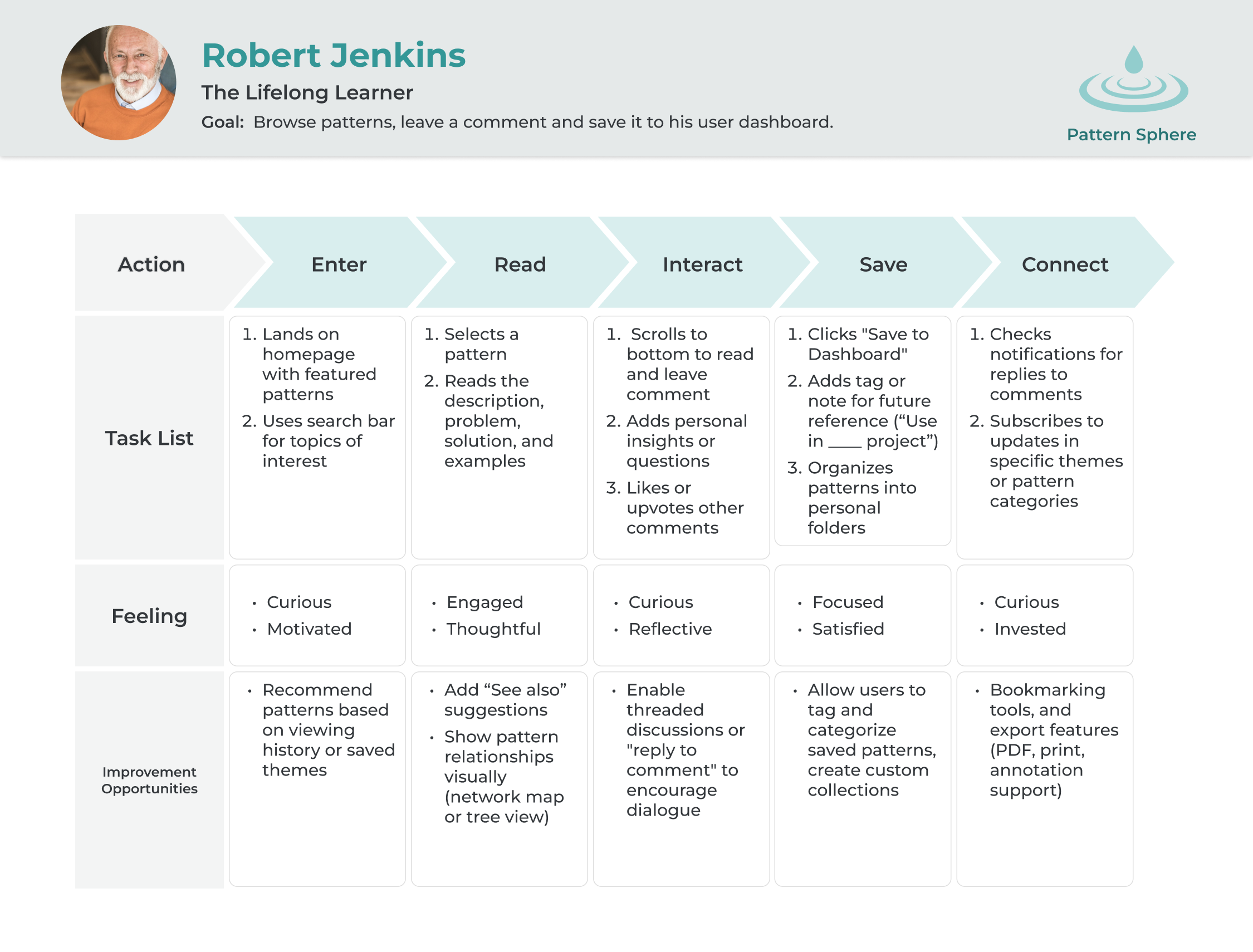
User Journey
I mapped user journeys for each persona, using their stories to spotlight key moments that would shape the product experience.
Turning Insights Into Action
I worked with the team to design features that addressed real frustrations and aspirations, not just theoretical needs.
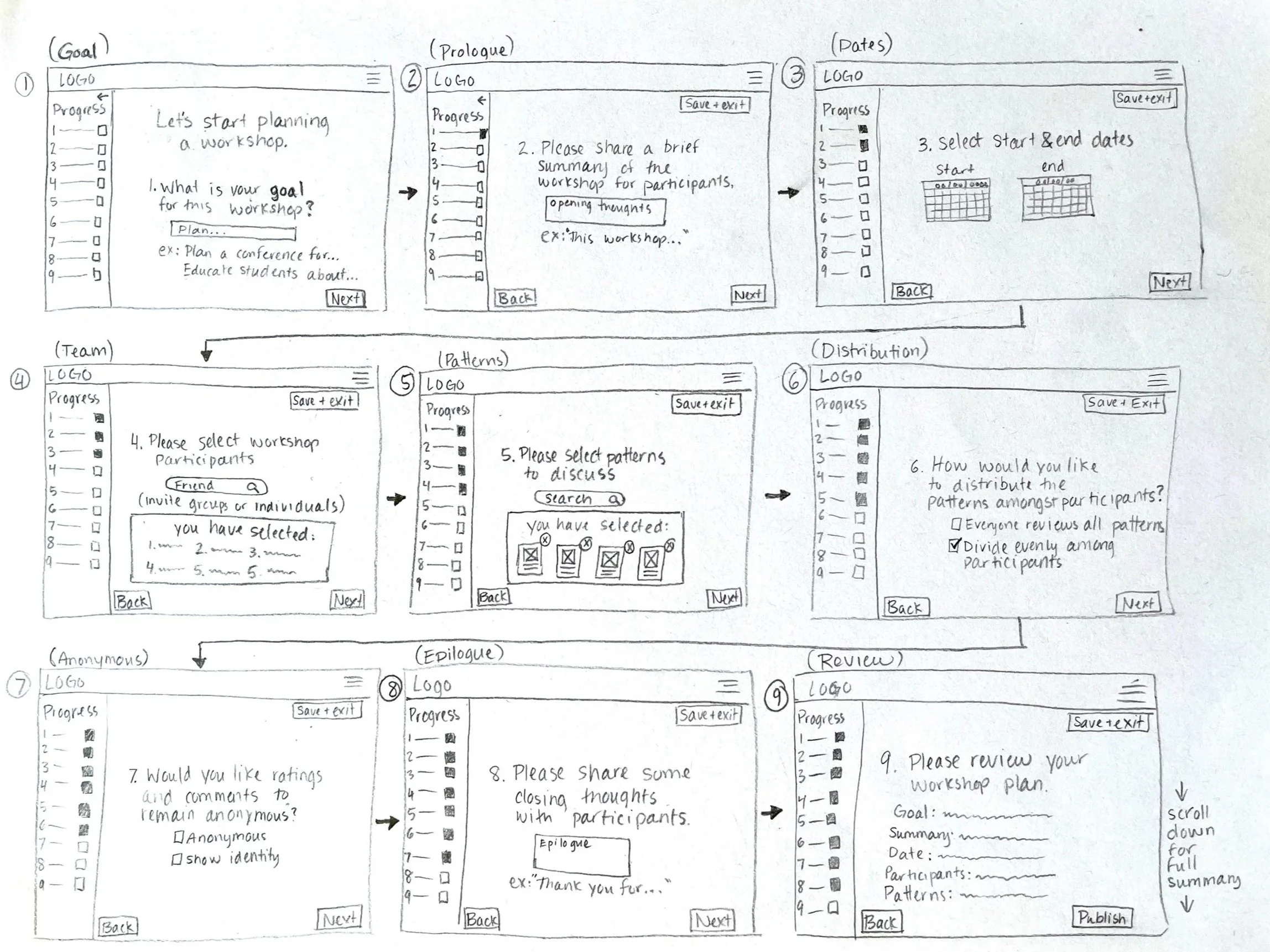
For instance, we developed a virtual workshop feature to:
Guide users through structured pattern-based inquiry
Support collaborative discussion
Help users move from understanding patterns to applying them
This feature marked a turning point, helping Pattern Sphere become an active, participatory platform rather than just a static resource.
Impact
My work directly shaped Pattern Sphere’s core product strategy and accelerated its progress from concept to execution. By pinpointing the highest-value user segments and mapping their journeys, I identified key feature opportunities and prioritized design efforts. As a result, the team is about to launch its first virtual workshop prototype.
Takeaways
Insights
Translating big ideas into something users genuinely want requires listening at every stage. Prototype testing showed that even small changes in language or workflow can make the difference between confusion and clarity. The biggest lesson: ongoing user feedback is the key to making complex products usable, valuable, and inspiring.
Next Steps
Continue refining the virtual workshop
Expand and validate personas as the user base grows
Support new features that deepen collaboration and real-world application
See my other case studies
Whimsy is a platform for parents to buy and sell gently used children’s clothing, toys and gear.
This case study demonstrates my thought process for accessibility, designing, prototyping, user flow, and creating a design system and style guide.

The Budget Forward app is a holistic approach to budgeting.
This case study demonstrates my thought process for accessibility, user research, information architecture, wireframes, prototyping and editing based on user feedback.
